If sleeves swallow your hands, jeans pool at your ankles and “midi” dresses hit your shins at an odd spot, you are probably shopping in the wrong size range, not the wrong size. Petite clothing is cut for a shorter frame from shoulder to hem, and once you know what to look for, getting a great fit gets a lot easier. This guide walks you through petite sizing, the fit points that matter most and the styling tricks that add visual length.
Quick answer
- Petite sizing is generally designed for women about 5’4″ and under. It is about height and proportion, not weight.
- Check six fit points: shoulders, sleeves, torso and waist, rise, inseam and hem.
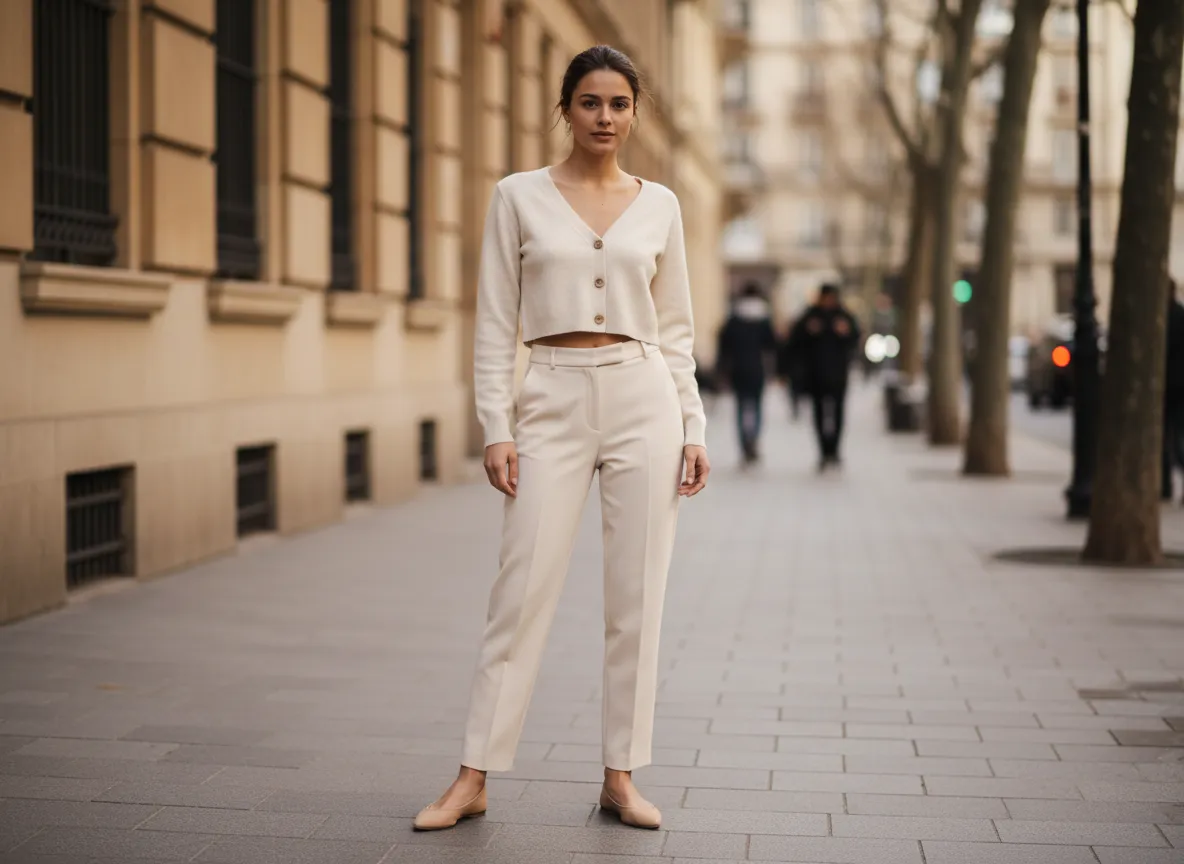
- Monochrome outfits, high rises, V-necks, cropped jackets and pointed-toe shoes all create a longer line.
- Hemming pants and shortening sleeves are the easiest, highest-impact tailoring jobs.
What does petite actually mean?
In US sizing, petite refers to height and proportion. Most brands design their petite ranges for women around 5’4″ and under. A petite size 8 is meant to have roughly the same bust, waist and hip room as a regular size 8, but with a shorter distance between the shoulder and waist, shorter sleeves, a shorter rise and a shorter inseam.
That means petite is not a synonym for small or slim. Petite women come in every size and every body shape, and many brands now offer petite cuts across a wide size range. If you are unsure which size to start with, our size calculator can help you get a baseline from your measurements.
Petite vs. short vs. regular
These labels can be confusing, so here is the simple version. Regular sizing is drafted for an average-height frame. Petite sizing shortens the whole garment proportionally: shoulders, armholes, torso, sleeves and legs. “Short” or “extra short” lengths, which you will mostly see on jeans and pants, usually shorten only the inseam while keeping the rest of the cut the same. If your issue is only pant length, a short inseam may be all you need. If tops and jackets also feel too long through the body, true petite sizing is the better bet. Our full size guide explains how US sizes compare across ranges.
The 6 fit points to check
When something feels off but you cannot say why, run through these six checkpoints in the fitting room.
1. Shoulders
The shoulder seam should sit at the edge of your shoulder bone. If it droops down your arm on a structured piece, the garment is too big through the frame, and that is hard to fix later.
2. Sleeve length
Long sleeves should end around your wrist bone. Sleeves that cover your knuckles make an outfit look borrowed.
3. Torso and waist placement
On dresses and fitted tops, the waist seam should land at your natural waist. If it sits on your hips, the bodice is too long for you.
4. Rise
A rise that is too long for your torso causes bunching at the front zip and extra fabric at the back. Petite and short-length jeans often have a slightly shorter rise to match.
5. Inseam
Measure the inseam of a pair of pants you love, from the crotch seam to the hem, and shop by that number rather than by label.
6. Hem
Skirts and dresses should end at an intentional point: above the knee, just below the knee or at the ankle. Hems that stop mid-calf can visually cut the leg.
Proportion tricks that add visual length
You do not need to look taller to look great, but if you enjoy a longer line, these simple moves help.
- Go monochrome or tonal. One color from top to toe, or close shades, keeps the eye moving up and down.
- Choose a high rise. High-rise pants and skirts put your waist higher, which makes your legs read longer.
- Try V-necks and open collars. A vertical neckline draws the eye upward.
- Pick cropped jackets. Jackets that end at or just above the hip, or at the waist, keep your leg line visible.
- Wear pointed-toe shoes. A pointed toe extends the line of your leg, whether in flats, loafers or heels. Browse more ideas in shoes and accessories.
Dress and jean lengths for petites
Dresses
Above-the-knee and just-below-the-knee lengths are the easiest everyday picks. Midis can absolutely work, especially petite-cut midis that end just below the widest part of the calf. Maxi dresses should graze the ankle or the top of your foot; if one drags on the floor, hem it. For relaxed options, see our casual dresses picks. If you are wearing a strapless or open-back style, the right bra makes a big difference; our sister site LingerieMantra has a helpful bra size calculator.
Jeans
Full-length straight and wide-leg jeans should just skim the top of your shoe. Ankle and cropped styles should end at or just above the ankle bone, showing a little skin. Bootcuts work best when the hem nearly covers the heel of the shoe you plan to wear most.
Common petite fit problems and fixes
| Problem | Fix |
|---|---|
| Pants pool at the ankle | Shop petite or short inseams, or hem to your shoe |
| Sleeves cover your hands | Petite tops, push-up sleeves or a tailor’s sleeve shortening |
| Dress waist sits on your hips | Petite-cut dresses or a belt at your natural waist |
| Midi hits mid-calf | Petite midis, or hem just below the knee |
| Blazer looks oversized | Cropped or petite blazers with fitted shoulders |
| Front of jeans bunches at the zip | Look for a shorter rise in petite or short lengths |
What to tailor first
A good tailor is a petite woman’s best friend. Here is a rough order of priority, from the easiest wins to the jobs worth doing only on pieces you love.
- Pant hems. Quick, usually inexpensive and makes the biggest difference. Ask to keep the original hem on jeans if you like that look.
- Dress and skirt hems. Simple on most fabrics, trickier on pleats or bias cuts.
- Sleeve length. Easy on unlined tops, more involved on jackets with buttons at the cuff.
- Taking in the waist. Helpful when pants fit your hips but gap at the back.
- Shoulders. The most complex job. If the shoulders do not fit, it is usually better to keep shopping.
Brands with petite and short lengths
Plenty of brands carry petite options. A few we cover in our brand guides:
- Abercrombie offers its jeans, including the Curve Love fit, in five lengths, including Extra Short.
- Madewell makes jeans in petite, along with tall, curvy and plus options.
- Old Navy carries budget-friendly basics in petite, in sizes 00–30 and XS–4X.
- Reformation is known for dresses and offers a petite range, with sizes up to 24.
Building a capsule for the office? Our work outfits section has looks that translate well to petite sizing.
Related: Petite with curves too? Browse our roundup of the best jeans for curvy women, many of which come in short lengths.
FAQ
Can I wear petite sizes if I am 5’5″?
Yes. If you have a shorter torso or shorter legs, petite cuts may fit you better than regular sizes. Go by fit, not the height on the label.
Do petite women have to wear heels?
Not at all. Pointed-toe flats, loafers and low block heels all keep a long line. Wear what feels good.
Can petite women wear maxi dresses?
Absolutely. Choose petite-length maxis or hem a regular one so it grazes your ankle, and add a defined waist if you like more shape.
Keep reading: all petite guides, find your body shape and our complete size guide.

Leave a Reply