
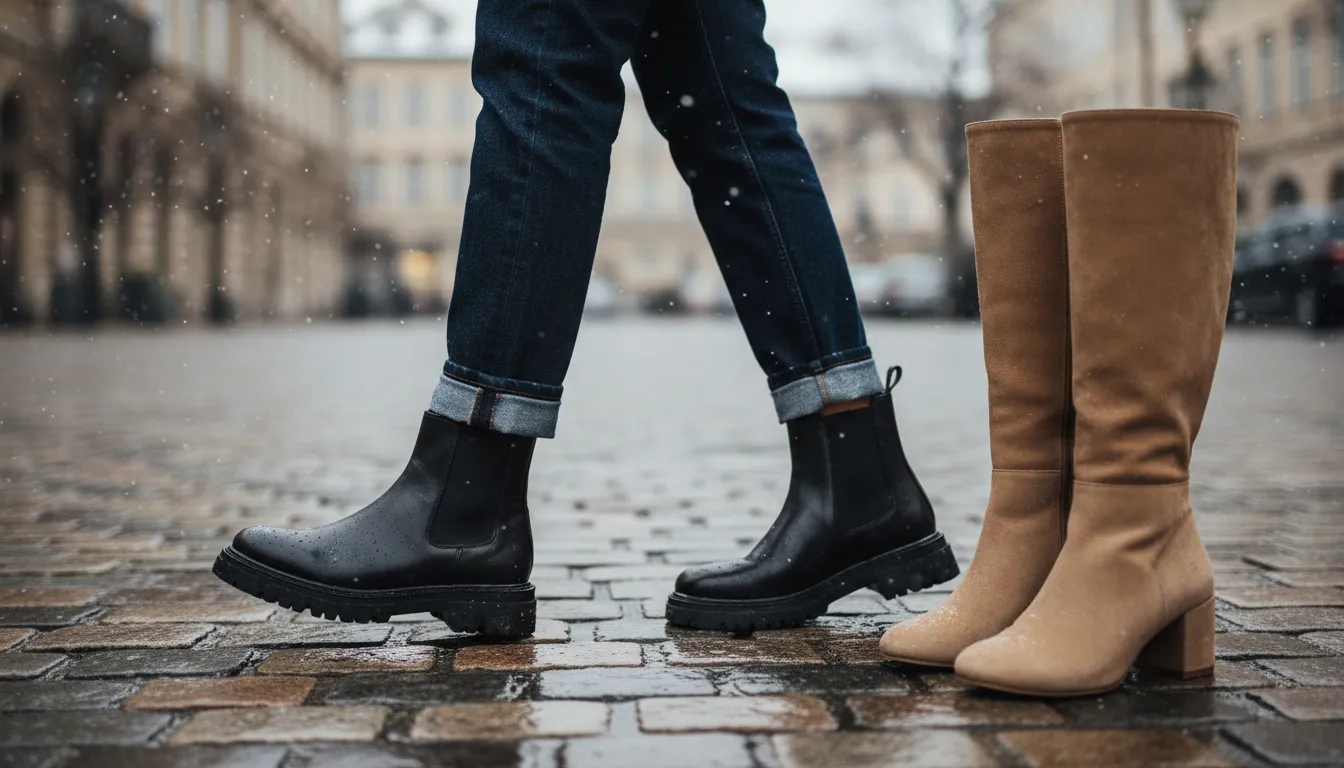
The right boots carry your winter wardrobe. They keep your feet dry and warm, give you grip on icy sidewalks, and finish every outfit from jeans to dresses. This guide walks through the main styles and exactly what to check before you buy.
Part of our Shoes guide. Try the free shoe size converter too.
Quick Answer
- Most women need two pairs: one everyday style boot and one truly weatherproof boot.
- For snow and slush, look for a waterproof upper, a sealed seam and a deep-tread rubber sole.
- For city wear, leather or suede Chelsea, ankle or knee boots with a rubber sole.
- Shop in the afternoon and bring the socks you will wear with them.
- Measure your calf before buying knee boots.
The Main Winter Boot Styles
Chelsea Boots
Elastic side panels make them easy to pull on. A lug-sole Chelsea in black leather is one of the most versatile boots you can own; it works with jeans, leggings, midi skirts and trousers.
Ankle Boots
Flat, block-heel or slight-heel ankle boots go to the office and dinner. A block heel of 2 inches or less is comfortable for walking all day.
Knee-High Boots
The perfect partner for dresses and skirts. Riding-style flat boots are the most practical; heeled and slouchy styles are dressier.
Lug-Sole and Combat Boots
Chunky soles give real traction on wet pavement and add an edge to feminine outfits.
Snow Boots
Built for deep snow and freezing temperatures, with insulation, waterproofing and a high shaft. Many now come in sleeker designs that look good with leggings and a parka.
Which Boot for Which Winter
| Conditions | Best boot | Look for |
|---|---|---|
| Dry and cool | Suede or leather ankle boots | Comfortable heel, padded insole |
| Rain and slush | Lug-sole Chelsea or rain boot | Waterproof leather or rubber, deep tread |
| Light snow | Water-resistant boots with grip | Rubber sole, warm lining |
| Deep snow and ice | Insulated snow boots | Waterproof, temperature rating, high shaft |
| Office and dinners | Knee or heeled ankle boots | Leather, block heel |
What to Check Before You Buy
- Waterproof vs. water-resistant: water-resistant handles light rain; waterproof (with sealed seams or a membrane) handles slush and snow.
- Sole: rubber with deep grooves grips best. Smooth leather soles are slippery on ice.
- Lining: shearling, faux fur, wool or fleece adds warmth; unlined boots need thick socks.
- Weight: heavy boots get tiring on long walks.
- Removable insole: lets you add a supportive or orthotic insert.
Fit Tips
Getting the Length Right
Leave about a thumb’s width between your longest toe and the end of the boot, and remember winter socks are thicker. Your heel should lift only slightly when you walk.
Wide Calves
Measure around the widest part of your calf and compare it with the boot’s shaft circumference, which most retailers list. Look for “wide calf” or “extended calf” styles, stretch panels, or back zips with gussets.
Petite and Tall Legs
Knee boots should end just below the bend of your knee. Petite women may prefer shorter-shaft styles; tall women can wear over-the-knee boots with ease. See our petite and tall guides.
How to Style Winter Boots
- Ankle boots + straight jeans: let the hem just graze the top of the boot or cuff it once.
- Knee boots + midi dress: the hem should cover the top of the boot for a smooth line. See our casual dress guide.
- Chelsea boots + leggings + long sweater: the easy weekend uniform.
- Heeled ankle boots + tailored trousers: polished for work, as in our business casual formulas.
Care Tips to Make Boots Last
- Spray leather and suede with a protector before the first wear.
- Wipe off road salt quickly with a damp cloth; it stains and dries leather.
- Dry wet boots at room temperature, stuffed with paper, never next to a heater.
- Condition leather a few times each season.
Boots are often discounted during the holiday sales; see our Black Friday fashion guide for how to spot a real deal. For everyday comfort, read comfortable shoes that still look stylish.
Boot materials compared
| Material | Best for | Care |
|---|---|---|
| Smooth leather | Everyday city wear | Condition and waterproof regularly |
| Suede | Dry, cold days | Protect with a suede spray; brush after wear |
| Rubber | Rain and slush | Wipe clean; check lining for warmth |
| Nylon with insulation | Snow and very cold weather | Spot clean; dry away from heaters |
Salt can stain leather and suede. Wipe boots with a damp cloth after salty days and let them dry naturally, away from radiators.
Wearing boots with a dress? Our free dress, shoes and bag matcher shows which boots and bag suit your dress.
FAQ
Should winter boots be a size bigger?
Not always. Try your usual size with thick socks. Size up a half size only if your toes touch the end or the boot feels tight across the top of your foot.
Are suede boots okay in winter?
Yes, in dry weather and with a protective spray. Avoid suede in heavy slush or salt.
What is the most versatile winter boot?
A black leather lug-sole Chelsea or ankle boot. It handles wet streets and works with almost every outfit.
How do I waterproof leather boots?
Use a waterproofing spray or wax made for leather, apply to clean, dry boots, and repeat during the season.
How do I remove salt stains from boots?
Wipe with a cloth dampened with a mix of water and a little white vinegar, then let the boots air dry and condition leather afterward.



Leave a Reply